
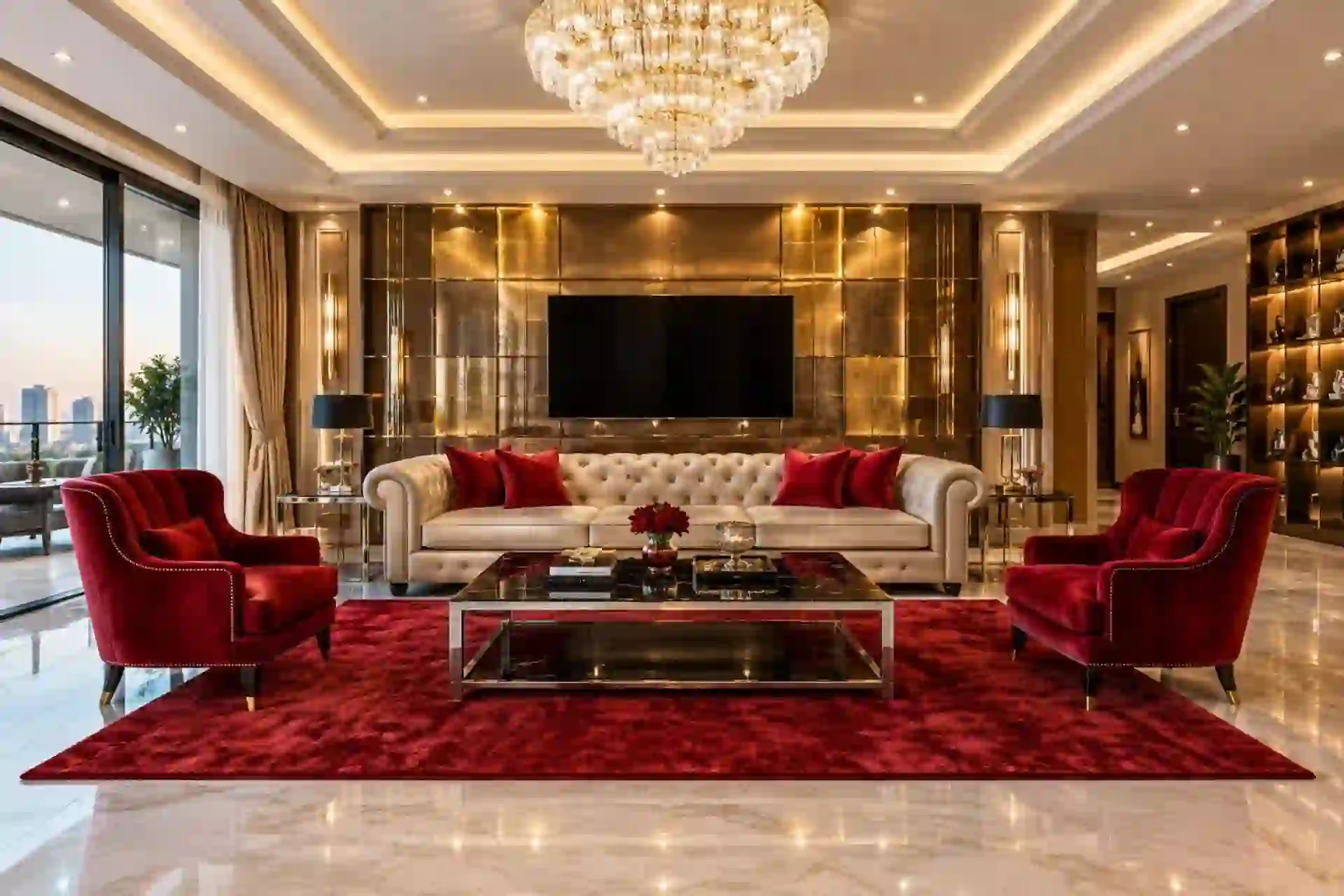
Living Room Ideas
Layout, colour and styling direction for the room that works hardest in the house — built around getting the sofa placement right first.
“The living room is a layout problem before it's a style problem.”
A beautiful sofa in the wrong spot, a rug that's too small, or seating angled away from conversation will make a well-decorated room feel off no matter how good the individual pieces are. Get the placement right first, and the styling choices get much easier.
Layouts to start from
Pick the one closest to your room's shape and traffic pattern, then adjust. Each layout is shown as a scaled floor-plan diagram alongside the finished look.
Face seating toward each other
Two sofas or a sofa and chairs facing each other across a rug — ideal for rooms without a dominant focal wall, and the layout that encourages actual conversation.
Floor plan — scaled layout
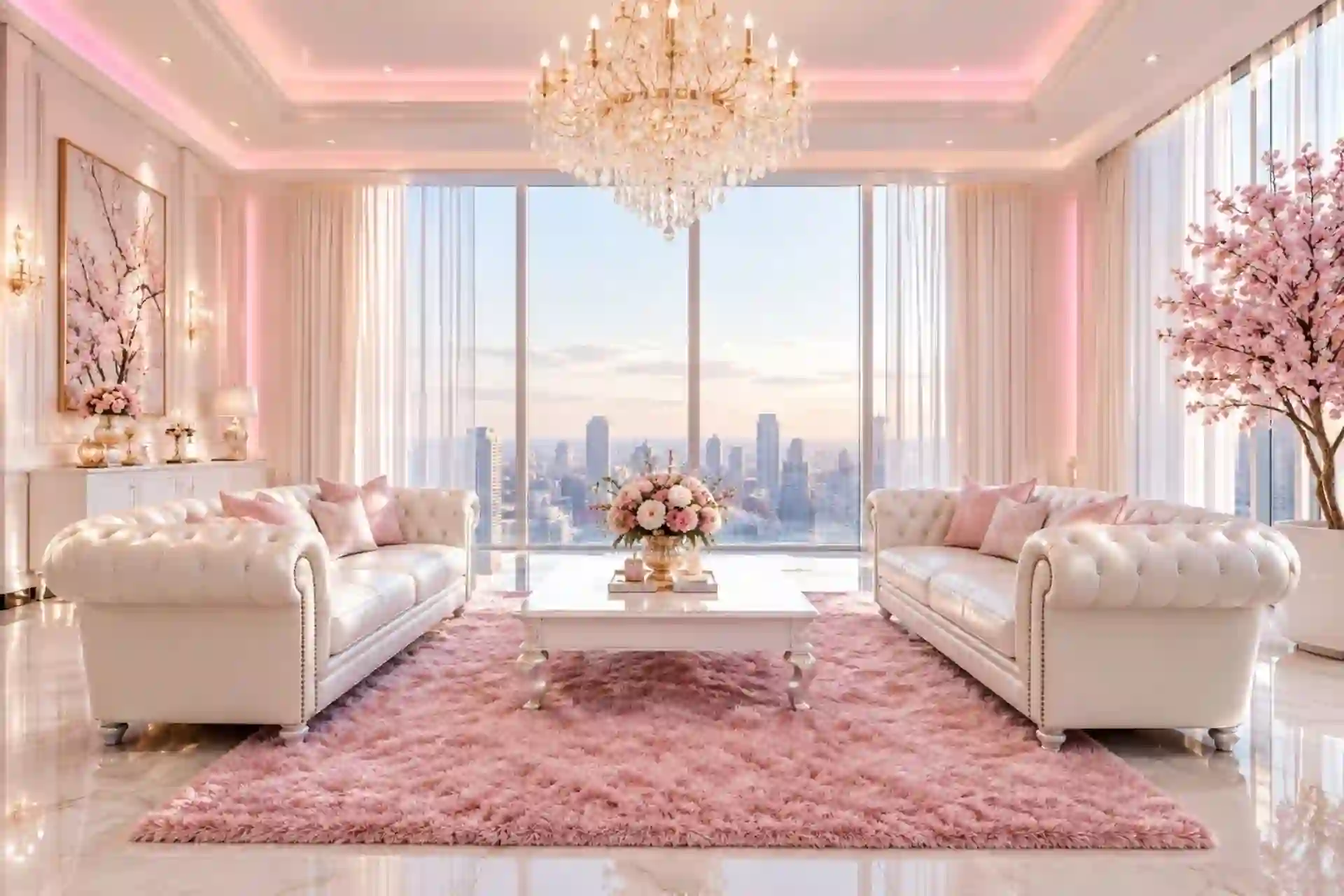
Finished room
The space-efficient default
The most space-efficient option for narrow or small rooms — frees up the centre for walkways and a coffee table, and works in almost any room shape.
Floor plan — scaled layout
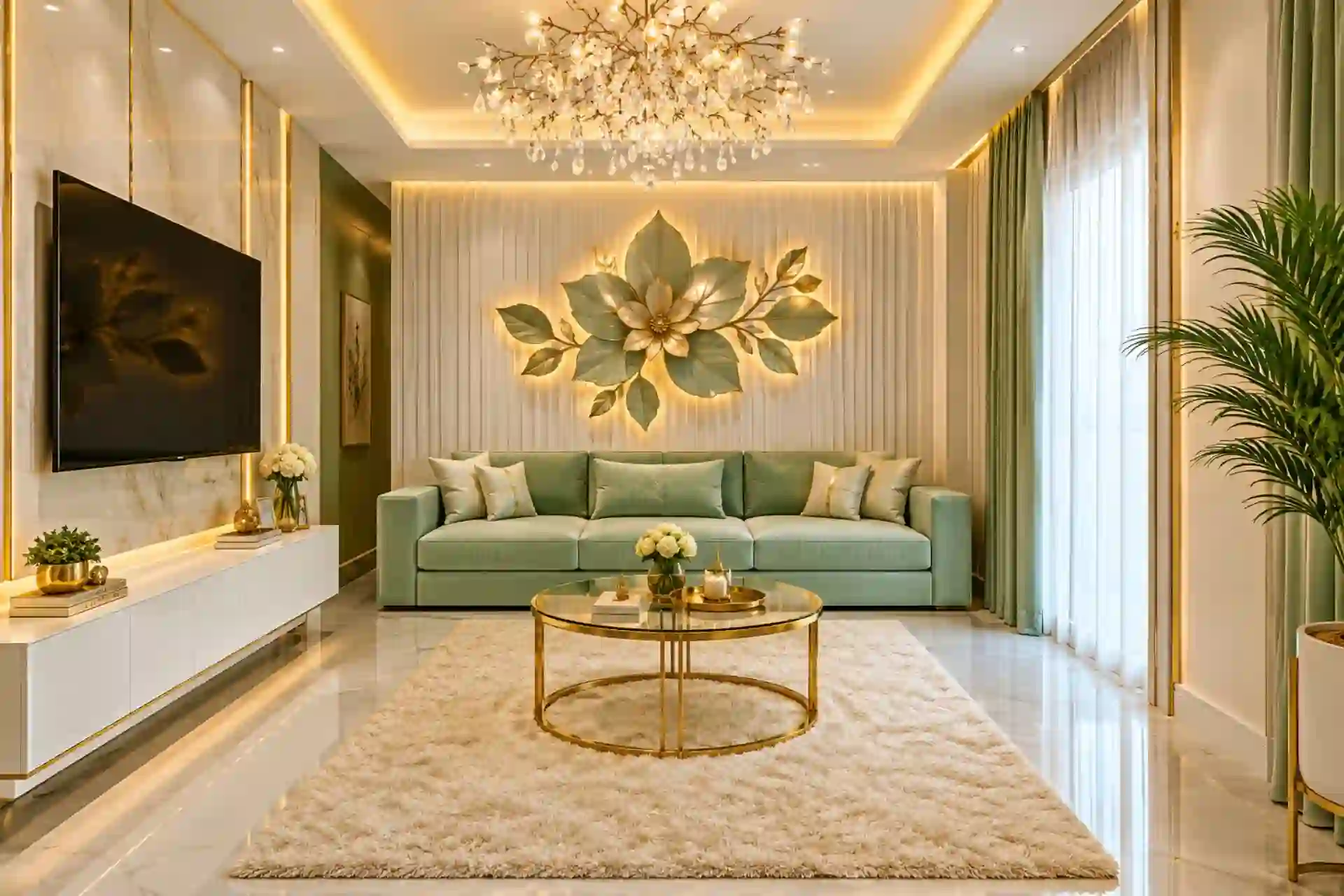
Finished room
Let the sofa define the zone
An L-shaped or U-shaped sectional separates the living zone from a dining or kitchen area without adding walls — the most common fix for open-plan rooms that feel shapeless.
Floor plan — scaled layout
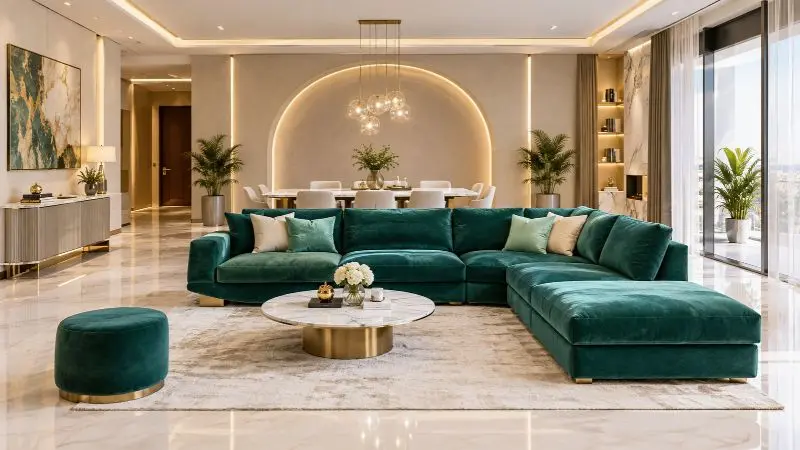
Finished room
Go compact, not crowded
A two-seater or loveseat with exposed legs, positioned diagonally or against the shortest wall, keeps a small room feeling open rather than tightly packed.
Floor plan — scaled layout
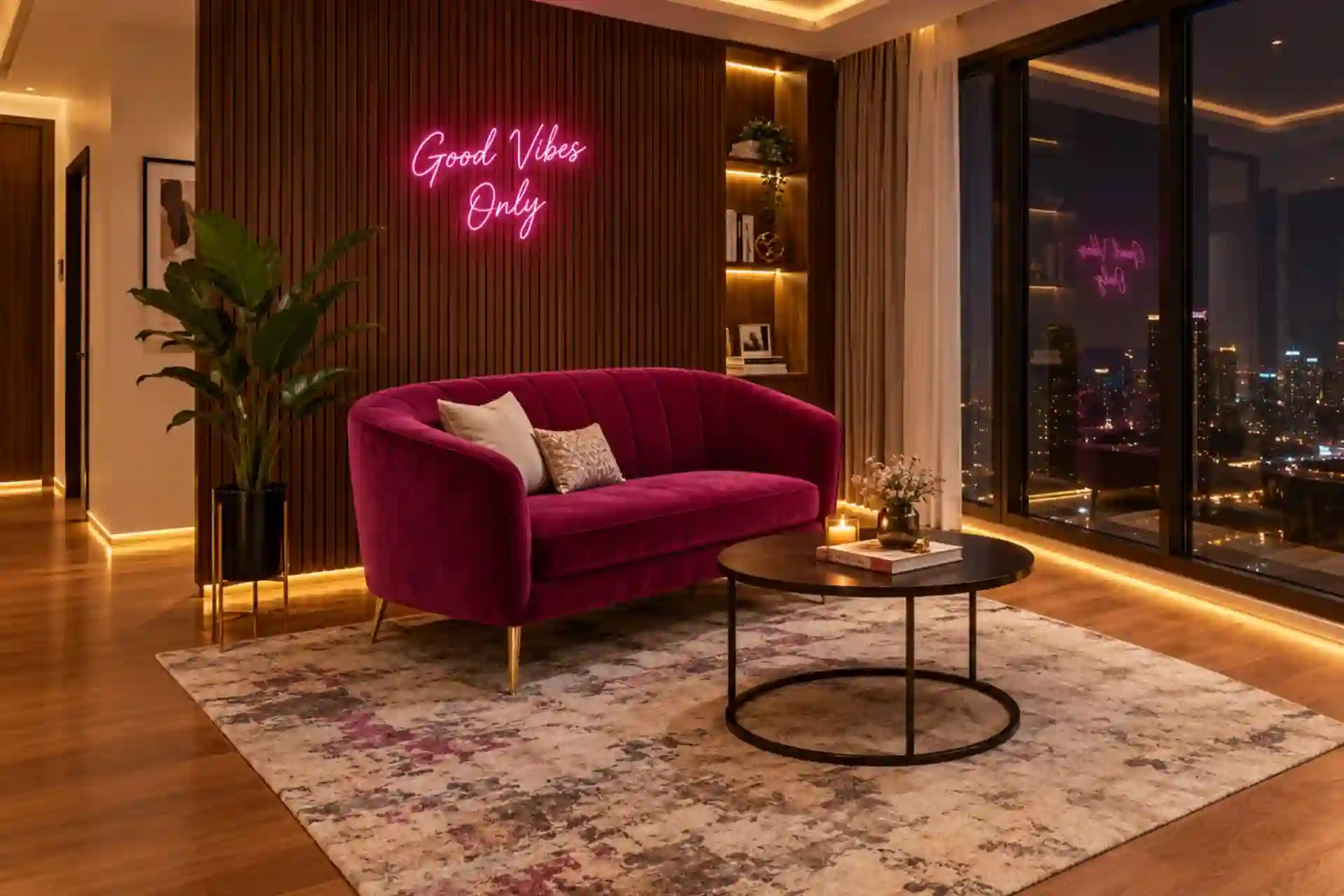
Finished room
Colour palettes that work
Four reliable directions, from safest to boldest.
Warm Neutral
Beige and greige with a matching sofa — works with almost any flooring.
Earthy Natural
Terracotta and olive tones paired with linen or boucle upholstery.
Black & White
One strong black element keeps a light room sharp without feeling cold.
Jewel Tone
Emerald or navy as a single anchor colour, balanced by neutral space.
Common mistakes to avoid
Small errors that quietly undercut an otherwise good layout.
Rug too small
If only the coffee table sits on it, the whole layout reads as disconnected.
Everything pushed against the walls
A room with no depth to the seating feels like a waiting room, not a living room.
No walkway left
Aim for at least 75–90 cm of clear path around the main seating.
One light source only
A single ceiling fixture leaves the seating area flat and under-lit in the evening.
Art hung too high
Centre wall art roughly at eye level relative to someone seated on the sofa, not standing.
Which layout suits your room?
A quick reference for matching layout to room shape.
| Room shape | Best layout | Why it fits |
|---|---|---|
| Narrow rectangle | Sofa against the wall | Keeps the centre walkway clear along the room's length |
| Large square | Conversation-focused | Uses the extra floor space without pushing seating too far apart |
| Open-plan | Sectional layout | Defines the living zone without needing walls |
| Room with a fireplace | Symmetrical formal | Balances the room around an existing focal point |
| Small apartment | Small-space layout | Exposed legs and a compact footprint keep the room open |
Frequently asked questions
How far should a sofa be from the TV?
As a general rule, sit 1.5 to 2.5 times the screen's diagonal size away. For a 55-inch TV, that's roughly 2 to 3.5 metres of distance between the sofa and the screen.
Should a sofa always face the TV?
Not necessarily. In rooms used mainly for hosting or reading, a conversation-focused layout facing other seating often works better, with the TV placed to one side rather than as the sole focal point.
How much space should be left around a sofa?
Leave at least 75–90 cm of walkway on the sides people actually pass through, and roughly 40–45 cm between the sofa and a coffee table.
Can a small living room fit a sectional?
Yes, if it's scaled correctly — a compact L-shaped sectional with exposed legs can work in a smaller room, especially in the corner, better than two separate large pieces would.
What's the easiest way to update a living room without buying a new sofa?
Rearrange the existing layout first, then add a rug, layered lighting and new cushions. These three changes typically make the biggest visible difference for the least cost.

Found your layout?
Browse sofa silhouettes and sizes to find the piece that fits it best.
Explore sofa designs