
Shop by Color
Colour sets the mood of a room before a single cushion is placed. This is a guide to choosing a sofa colour that feels considered — grouped by the mood it brings into a space, not just its name.
“Colour is the first decision a room makes — everything else follows it.”
A neutral sofa recedes and lets art, rugs and light take the lead. A deep, saturated sofa becomes the room's anchor and asks everything else to work around it. Neither is right or wrong — it comes down to how much of a statement your seating should make.
The full colour library
Hover a tile for the mood it brings into a room.
Beige & Cream
The most versatile starting point — warms up a room without competing with rugs, art or wood tones.
Grey & Greige
A cooler, more architectural neutral that pairs naturally with black metal, glass and concrete.
Navy Blue
Calm and grounded rather than loud — a genuine alternative to black in a traditional room.
Emerald & Forest
Deep, saturated green — best as a single statement piece in a room kept otherwise simple.
Burgundy & Wine
Elegant rather than loud — sophisticated in leather, dramatic in velvet.
Black
Sharp and architectural — anchors a modern room instantly, best with plenty of natural light.
White & Ivory
Opens up a small or dim room more than any other colour — best in a performance fabric.
Rust & Terracotta
A grounded, organic alternative to red — sits naturally with olive green and natural wood.
Blush & Dusty Pink
Closer to a warm neutral than a bright pink — gentle colour without tipping into playful.
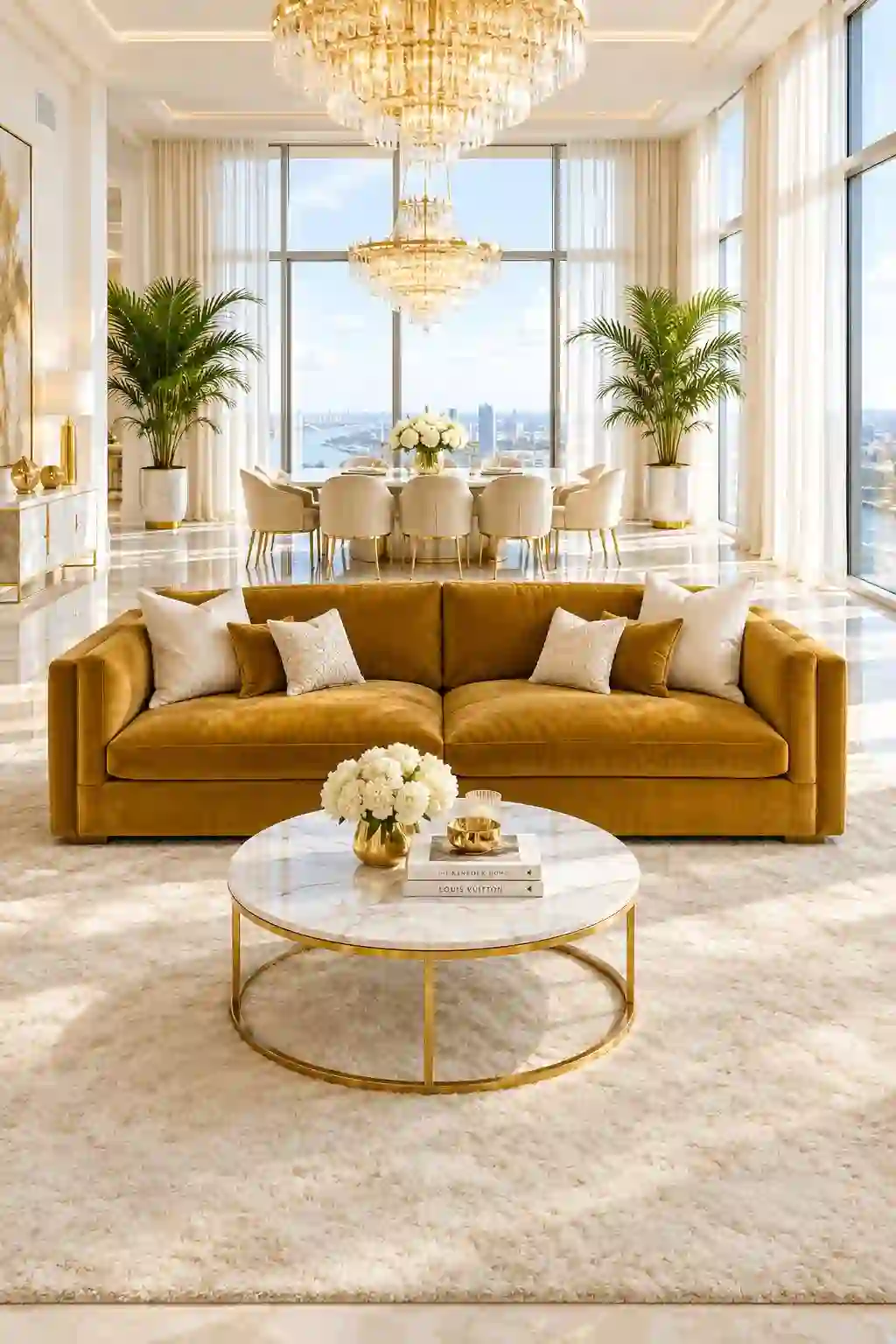
Mustard & Ochre
A mid-century-leaning colour that pairs beautifully with walnut and forest green.
Charcoal
Softer than true black but deep enough to ground a room without going fully dark.
Sage & Olive
A quieter green than emerald — brings calm without reading as a bold statement.
How to choose the right colour
Five checks that separate a colour that lasts from one you'll tire of.
Test it in your own light
A colour looks different under morning sun, afternoon light and lamplight — view a sample at more than one time of day.
Let room size guide intensity
Smaller rooms generally read better in lighter, quieter tones; larger rooms can carry a saturated colour without feeling closed in.
Start from what's already fixed
Flooring, walls and cabinetry aren't changing soon — choose a colour that complements them rather than fights them.
Match intensity to fabric
The same colour reads differently in velvet, boucle or leather — a rich tone often feels more sophisticated in a textured finish.
Weigh trend against timelessness
A neutral sofa with colourful cushions is easy to refresh later; a bold sofa colour is a longer-term commitment.
Which colour suits your room?
A quick reference for matching palette to space.
| Your room | Colours that work | Why it fits |
|---|---|---|
| Small or dim room | Cream, ivory, light grey | Reflects light and keeps the space feeling open |
| Bright, sunlit room | Navy, emerald, charcoal | Natural light balances the depth of a darker tone |
| Busy family household | Grey, charcoal, rust | Mid-to-dark tones are more forgiving day to day |
| Formal living room | Burgundy, navy, black | Rich, confident tones suit a more considered space |
| Open-plan living | Beige, greige, sage | Neutral tones tie separate zones together |
| Statement-led interior | Emerald, mustard, terracotta | Saturated colour works as the room's focal point |
Frequently asked questions
What's the safest sofa colour if I'm not sure?
A warm neutral — beige, greige or light grey — is the easiest starting point. It works with almost any wall colour and flooring, and leaves room to bring in bolder colour through cushions, throws and art.
Do darker sofa colours show more or less every day?
It depends on the shade and fabric finish more than the colour itself. Mid-tones and textured weaves are generally the most forgiving for daily life, while very light or very dark solids show the most contrast against dust and pet hair.
Can I mix two sofa colours in the same room?
Yes — a common approach is one neutral sofa paired with a smaller accent chair in a bolder colour, or two neutral sofas facing each other with colour introduced through cushions and a rug instead.
Will a bold colour go out of style quickly?
Trend cycles move faster for accent colours than for whole sofas. If you love a bold tone, choosing it in a classic silhouette helps the piece feel considered rather than dated as trends shift.
How do I know if a colour will clash with my existing decor?
Bring a fabric swatch home and lay it against your flooring, wall colour and any large existing furniture in daylight. Undertones matter more than the base colour — a warm beige can clash with a cool grey floor even though both are "neutral."